- Bellingham Scoop
- Posts
- Bham Scoop: Wednesday Special Edition
Bham Scoop: Wednesday Special Edition
Something has to give on Railroad Avenue.
Downtown Bellingham's Alleys Are at a Breaking Point. The City Wants to Fence Them Off.
Something has to give on Railroad Avenue. That is the message coming from business owners, city officials, and the Bellingham Police Department as the City Council considers a new ordinance that would allow temporary alley closures in downtown Bellingham to disrupt drug dealing, overdoses, and other crimes that have made certain stretches nearly impossible to work near.
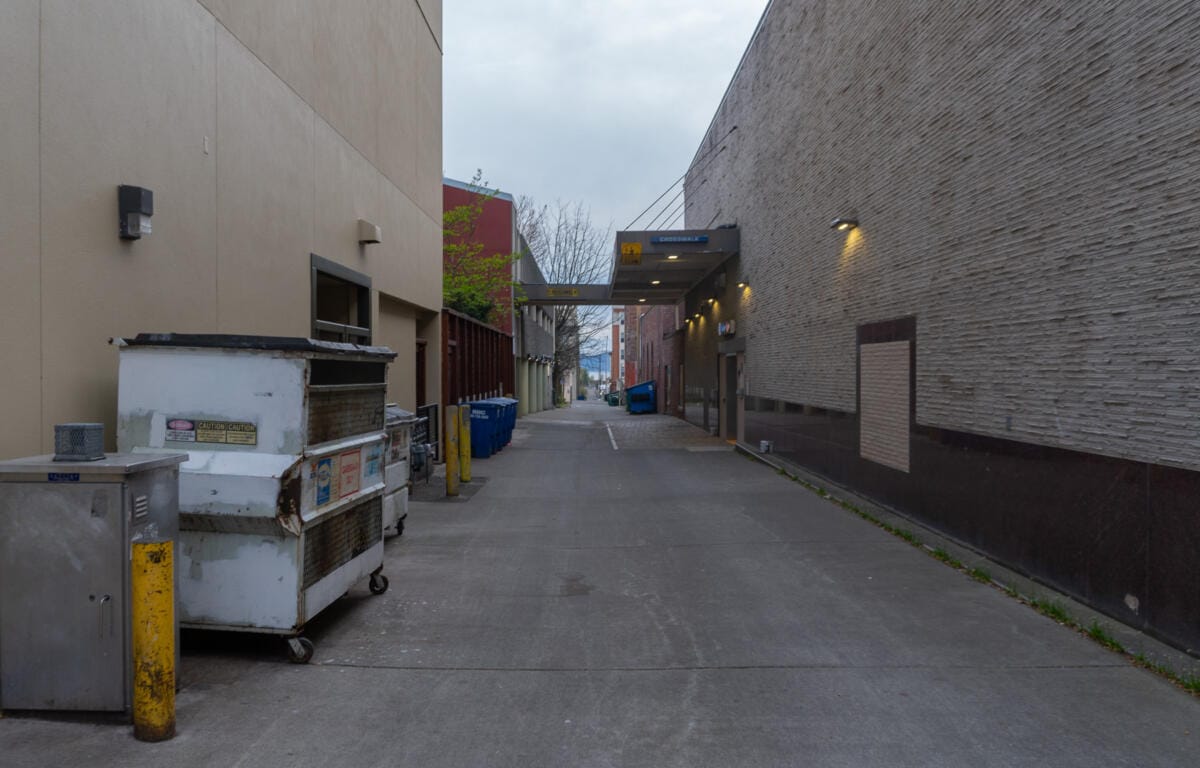
The ordinance, introduced Monday, March 23, would give the police chief the authority to request the temporary closure of a specific alley when conditions warrant it. Fencing would go up, unauthorized entry would be a misdemeanor, and the city would use the window to make longer-term improvements like better lighting, cameras, and consolidated dumpsters. Business owners, delivery drivers, and emergency responders would still have access. The goal, city deputy administrator Forrest Longman said, is not to hand out citations. It is to break a pattern that has taken hold over years.
Just how bad is it? In 2025 alone, Bellingham Police documented 108 incidents of violence and 342 drug-related calls, including 89 overdoses, in a single three-block section of the Railroad/Cornwall alley. BPD Deputy Chief Jay Hart, who has been with the department for 26 years, told the council that in his experience, conditions in those alleys are "probably the worst" he has ever seen.
The city estimates fencing and surveillance for one alley would cost around $10,000. In 2025, Bellingham Public Works spent $234,000 cleaning downtown, with 80% of that focused on just two sections of alley. Longer-term design improvements made possible by closures could help reduce that ongoing cost.
Why It Matters
For business owners in the Railroad and Holly Street corridor, this is not an abstract policy debate. Horseshoe Cafe co-owner Kate Groen told Cascadia Daily News that her staff has called 911, administered naloxone to overdosing individuals, and been through experiences that are "overwhelming and traumatic." The cafe has lost employees who said they simply could not work downtown anymore. Groen has owned the cafe since 2015 and said conditions have worsened significantly since the pandemic, even after a brief improvement following a 2024 mayoral executive order on the fentanyl crisis.
Mayor Kim Lund framed the ordinance as a targeted response to predatory drug dealing, not an effort to displace people experiencing homelessness. "Our focus when we talk about enforcement is enforcement on predatory drug dealing," she said. Opponents who spoke at Monday's meeting argued the closure policy would criminalize homeless residents and shift problems elsewhere without solving them. The city says it will monitor crime rates and gather feedback from business owners and service providers to measure the impact.
What the proposal makes clear is that the current situation is not stable. Sojourn Boutique owner Peggy Platter told the council that what happens behind her store is "nothing people should be encountering" when heading to work. Businesses that stay downtown take on real costs, financial and human, that the rest of the city does not always see. If the ordinance passes, it will represent the most direct intervention the city has attempted since the 2024 executive order, and one that business owners along Railroad Avenue have been asking for.
What To Watch
The ordinance was introduced March 23 and will need a council vote to pass. Watch for a public hearing notice from the Bellingham City Council. A final vote has not yet been scheduled.
City staff previously visited Seattle, which fenced similar alleys last year. Those areas were described as "devoid of people" afterward. Bellingham staff will be watching whether closures displace activity or reduce it.
To weigh in on the ordinance, contact the City Council directly at (360) 778-8200 or email your council member through the city's website. Public comment is part of the formal hearing process before any vote.
Background
In February 2024, Mayor Kim Lund signed an executive order aimed at improving downtown conditions during the fentanyl crisis. The order increased cleaning and sanitation, and boosted visible police presence. Horseshoe Cafe's Groen said the order made a real difference: her staff did not call in a single overdose for six months. But she says things are going downhill again, which is what brought business owners back to City Hall this week.
The alley closure concept draws on a broader toolkit of environmental design strategies used in other cities to reduce crime, sometimes called CPTED (Crime Prevention Through Environmental Design). The idea is that physical changes to a space, lighting, sightlines, access points, can reduce criminal activity without requiring a constant enforcement presence. Whether it works in Bellingham's specific context, and whether the council agrees to try it, is now the open question.
Reply